
Why choose Arm Zena CSS

12 months accelerated time-to-market potential
Pre-validated IP and software shorten design cycles and time to market.

Up to 20% less engineering effort
Reduces silicon design work so teams can focus on differentiated capabilities.

Up to 30% faster software porting
Standardizes software interfaces to cut platform-to-platform porting time and lower integration costs.
Benefits
Enabling faster, smarter, safer, secure platforms
-
Shortens development timelines by up to a year with a pre-integrated compute platform designed to support compliance with ISO 26262 and ISO 21434.
-
Accelerates development using virtual platform models and reference firmware for parallel software and silicon design.
-
Reduces platform fragmentation by standardizing on Arm architecture and shared models across domains.
-
Lowers engineering effort by up to 20%, enabling focus on differentiation while supporting mixed-criticality workloads.

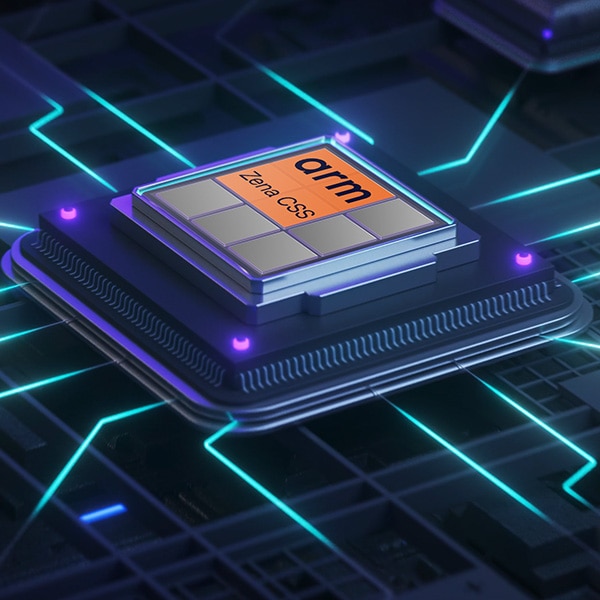
Inside Zena CSS
The building blocks of Arm Zena CSS
Arm Zena CSS integrates the following components for safety-critical workloads. It is delivered as a configurable package, enabling partners to extend architectures for specific performance, safety, and latency targets.

Compute and system IP
Cortex-A CPUs (such as Cortex-A78AE) alongside Cortex-R52+ processors with CMN-600 coherent mesh, NIC-450 interconnect, and integrated interrupt control.

Security and safety
Arm TrustZone isolation, ECC protection, and ASIL D-capable lock-step redundancy designed to support ISO 26262 compliance.

Power and efficiency
Power Policy Unit (PPU) and DVFS controllers enable real-time performance at low energy cost.

Software and tools
Reference firmware, RTOS support, automotive SDKs, virtual platforms, and simulation models via the Arm Developer Site.
Explore Arm Zen CSS Safety and Security
Arm Zena CSS Safety
Arm Zena CSS Safety Island, with ASIL D capability, provides high-integrity fault monitoring and system control for safety.
Arm Zena CSS Security
Arm Zena CSS security enclave targets ASIL B safety, mitigating threats for next-gen E/E architectures.
Use cases
Innovation where it matters most
Robotics
Deploy machine learning models directly at the edge for on-device object detection, adaptive behavior, and more. Leverage heterogeneous compute to bring AI-powered intelligence into real time without cloud dependency.

Digital cockpit and IVI
Deliver rich, immersive graphics and AI-enhanced user experiences. Securely partition multiple operating systems on a single platform to enable a modern, mixed-criticality digital cockpit and in-vehicle-infotainment system.

Centralized vehicle compute
Unify compute workloads across the vehicle under a software-defined architecture. This enables safe mixed-criticality operation—from real-time control to infotainment—on a centralized, safety-certified compute platform.

Advanced driver-assistance systems (ADAS)
Create AI-powered ADAS features like collision avoidance that detects erratic driving and preempts an incident or contextual modes that respond as a vehicle transitions from highways, into a city environment. Ensures consistent, scalable performance across vehicle models while enabling real-time, safety-critical functionality.


Success stories
Success stories powered by Arm Zena CSS

AWS builds automotive AI on Arm
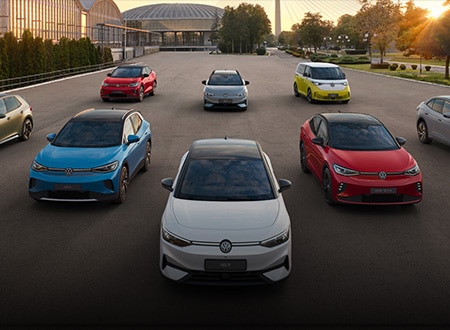
Volkswagen’s intelligent driving future
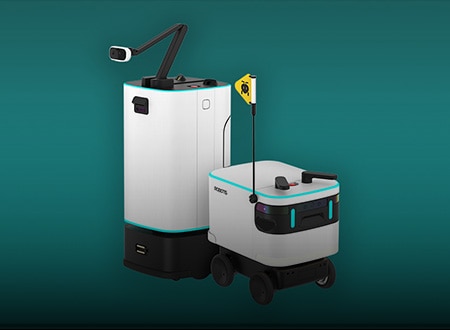
ROBOTIS AI autonomous robots
Resources
Latest news and resources
- News and Blogs
- Podcasts


Key takeaways
-
Arm Zena CSS delivers pre-integrated, safety-ready compute for next-generation automotive platforms, combining Cortex-A and Cortex-R processors with system IP to accelerate time to market.
-
ASIL-D-capable architecture designed to support ISO 26262 compliance and provide deterministic, real-time safety functionality.
-
Scales across automotive domains including ADAS, digital cockpit, and centralized vehicle compute.
-
Supported by the Arm Developer Hub with SDKs, virtual hardware, and integration tools to accelerate software development.

FAQs
How does Arm Zena CSS improve time to market?
Zena CSS provides pre-validated compute subsystems, system IP, and reference software that can reduce development cycles by up to 12 months compared to custom SoC designs.
How does Arm Zena CSS support automotive functional safety standards such as ISO 26262?
Zena CSS includes ASIL-D-capable IP and supports ISO 26262 compliance with detailed safety documentation and diagnostic coverage reports.
Which Arm processors are included in Zena CSS?
Zena CSS integrates Cortex-A CPUs (such as Cortex-A78AE, depending on configuration) alongside Cortex-R52+ processors, balancing performance and real-time determinism for compute domains.
How does Zena CSS support AI-defined vehicle architecture?
Through supporting virtualization, mixed-criticality partitioning, and secure hypervisor enablement, Arm Zena CSS allows continuous feature updates and domain isolation.
Where can developers access tools and models for Zena CSS?
Arm provides reference software, virtual platforms, and development resources on developer.arm.com.