
Performance
Greater than 2x performance per rack on Arm
The design choices of the Arm AGI CPU are made to deliver maximum performance at rack scale. From microarchitecture to memory, clock frequency to I/O—everything adds up to more performance at gigawatt scale.1
Performance
Modern Arm architecture carries more efficient instruction execution not burdened by decades of legacy complexity. The memory system delivers high bandwidth per core and minimal latency, helping ensure memory does not slow performance.

Scale
Low per-core TDP can support denser deployments and reduced thermal throttling. Each core is dedicated, which can help reduce resource contention and support performance under high thread loads.
Efficiency
High rack density and high performance per watt help ensure maximum utilization of data center space and power resources.

Arm AGI CPU coming soon to data centers from


Servers and rack-scale systems
Arm AGI CPU servers

Arm AGI CPU 1OU Dual NodeReference Server
Reference design for maximum density deployments of Arm AGI CPU – in a OCP DC-MHS standard form factor 1OU Dual Node server.

Arm AGI CPU 2U2PReference Server
19” 2U2P reference design for Arm AGI CPU deployment in a traditional form factor.
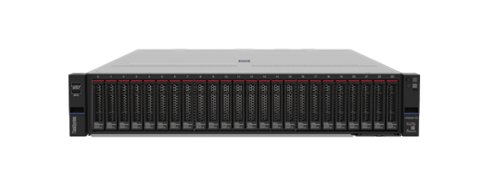
Lenovo HR650a V3 2U Arm AGI CPU System
Enterprise-class 2U Arm AGI server optimized for cloud infrastructure, delivering reliable performance and low TCO.
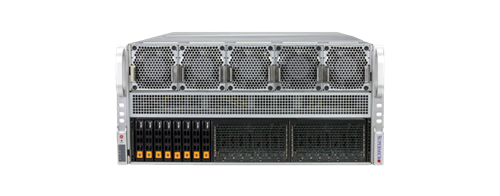
Supermicro 5U Arm AGI CPU PCIe GPU System
High-density 5U AI platform combining dual Arm AGI CPUs with extensive PCIe GPU expansion.
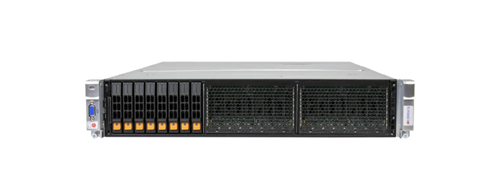
Supermicro 2U Hyper Arm AGI CPU Hyper System
Compact 2U dual-socket Arm AGI server designed for efficient cloud and AI infrastructure deployments.
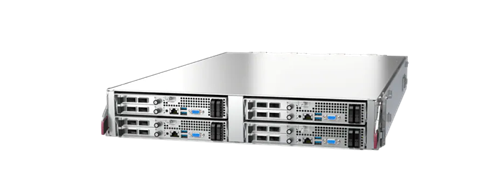
Supermicro 2U4N Arm AGI CPU Liquid-Cooled Server
Liquid-cooled 2U 4-node server for cloud and AI workloads, including agentic AI and AI pre-processing, offering maximum performance, density, and efficiency.
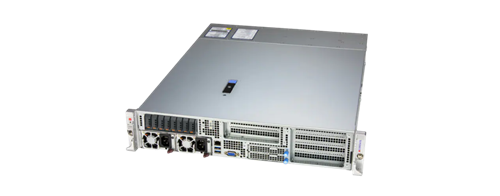
Supermicro 2U Hyper-E
Arm AGI CPU Server
Single-socket 2U server with up to 3TB of memory for cloud and edge computing.

ASRock Rack 2OU2N-ArmSystem
High-density dual-node Arm server built to OCP ORv3 standards for scalable, power-efficient cloud deployments.
Arm AGI CPU liquid cooled rack-scale systems

Supermicro 2U 4-Node
Arm AGI CPU Rack-Scale Solution
Ultra-density multi-node liquid cooled ORv3 rack architecture, featuring 76 nodes with 152 Arm AGI CPUs totaling 20,672 cores.

Supermicro 1U 4-Node
Arm AGI CPU Rack-Scale Solution
Maximum compute density multi-node liquid cooled ORW rack architecture, featuring 168 nodes with 336 Arm AGI CPUs totaling 45,696 cores.
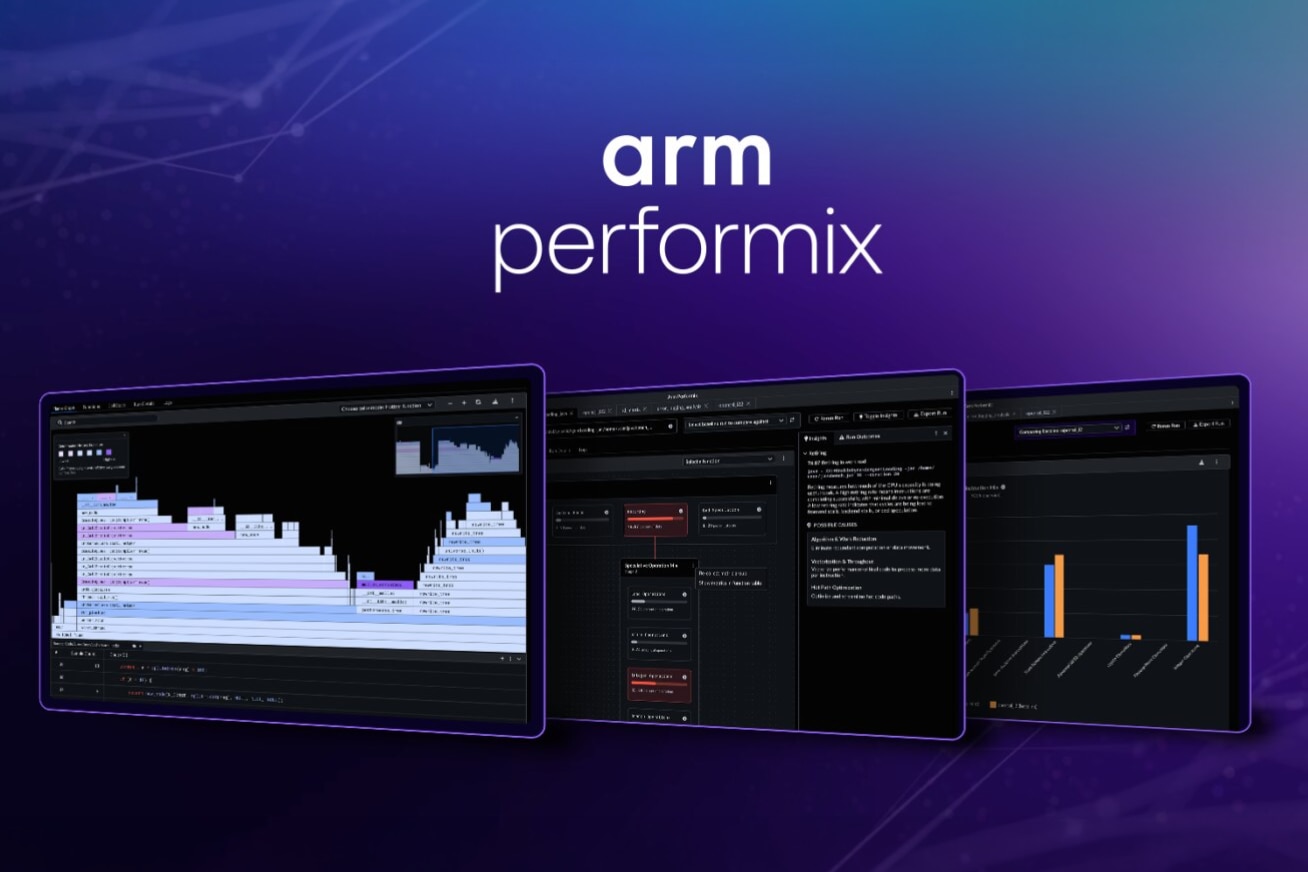
Optimize workloads for Arm AGI CPU
Arm Performix is a performance analysis toolkit for developers building AI and large application workloads. It can identify bottlenecks and provide targeted code optimizations to improve efficiency and performance on the Arm AGI CPU.
Key takeaways
Key takeaways
-
The Arm AGI CPU is purpose-built for agentic AI workloads that require continuous, coordinated processing.
-
It acts as the orchestration layer, managing accelerators and coordinating thousands of AI agents simultaneously.
-
The processor is based on Arm Neoverse CSS V3, leveraging a proven platform and ecosystem.
-
It delivers high performance and supports extreme rack-level density for modern data centers.
-
The Arm AGI CPU enables faster time-to-market by building on Arm’s existing software and hardware ecosystem.


Frequently asked questions
Q: What is the Arm AGI CPU and what makes it different from traditional data center CPUs?
A: The Arm AGI CPU is Arm’s first production silicon, designed specifically for agentic AI workloads, delivering high performance, scalable parallel processing, and energy-efficient operation. It enables data centers to run continuous AI workloads at scale while optimizing throughput, resource utilization, and power consumption.
Q: What are the key features of the Arm AGI CPU?
A: The Arm AGI CPU combines high core density, optimized memory architecture, and scalable system design to support AI workloads at scale:
- Efficient cores: Up to 136 Arm Neoverse V3 cores with dedicated 2 MB L2 cache per core and up to 3.7GHz boost frequency, enabling responsive, parallel performance—Arm AGI CPU specs.
- Performance and efficiency: High instruction-per-cycle execution on a TSMC 3 nm process with 300W TDP, balancing compute throughput and energy efficiency—Arm AGI CPU specs.
- Tuned memory architecture: Delivers 6GB/s memory bandwidth per core with support for DDR5-8800 memory and sub-100ns latency, reducing data bottlenecks for AI workloads—Arm AGI CPU specs.
- Built for density: Supports high-density deployments, including reference designs with up to 272 dedicated cores per 1U server and air-cooled configurations compatible with standard infrastructure—Arm AGI CPU specs.
- Rack-scale deployment: Designed for large-scale AI infrastructure, enabling configurations with thousands of cores per rack for continuous AI processing—Arm AGI CPU specs.
- Flexible I/O: Includes 96 PCIe Gen6 lanes, CXL 3.0 for memory expansion, and AMBA CHI links for accelerator connectivity, enabling composable AI systems—Arm AGI CPU specs.
Q: What is agentic AI, and why does it require a new type of CPU?
A: Agentic AI refers to systems that operate continuously, coordinating tasks and making decisions in real time. These workloads require CPUs that can orchestrate distributed systems efficiently at scale.
Q: How does the Arm AGI CPU improve data center performance?
A: It improves performance by delivering high, per-task efficiency and scaling across thousands of cores within a rack, enabling more work per system. This results in more than 2x performance per rack compared to x86 systems.1
Q: How does the Arm AGI CPU support AI infrastructure at scale?
A: It supports AI infrastructure by managing distributed workloads, coordinating accelerators, and optimizing data movement across systems to enable continuous, large-scale AI operations.
Q: How does the Arm AGI CPU fit into the Arm ecosystem?
A: It extends the Arm compute platform into production silicon, giving partners the flexibility to deploy Arm technology through IP, compute subsystems, or ready-to-deploy CPUs.