
Enabling the physical AI revolution
-
 AI-defined vehicles
 -
 Robotics
Centralized compute for full vehicle autonomy
Powering the transition from L2+ ADAS to fully autonomous L4 and L5 robotaxis and consumer vehicles,. Arm scalable compute is the foundation for the AI-defined vehicle. It enables the centralized, high-performance processing required for complex sensor fusion, perception, and planning.

Scalable compute from motor control to AI planning
Arm heterogeneous compute architecture provides power-efficient performance for everything from real-time motor control to high-level AI planning, enabling the next generation of advanced robotics, from humanoid robots requiring immense compute for bipedal locomotion and dexterous manipulation to autonomous mobile robots (AMRs) transforming warehouse logistics.


Autonomous mobility
Leveraging Arm for RoboCars
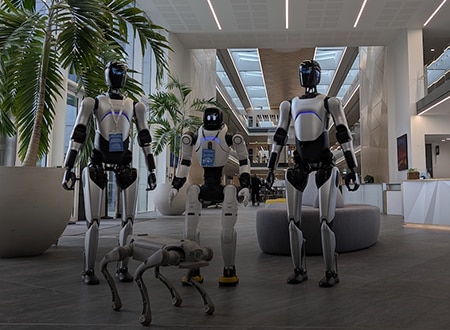
Humanoid robotics
AgiBot powering intelligent robots
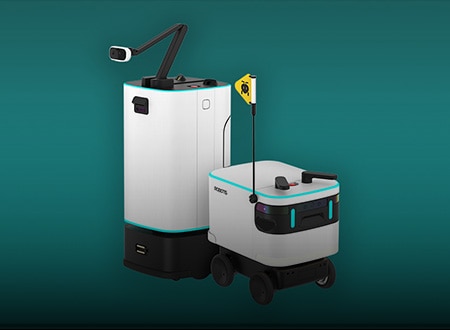
Robotics
ROBOTIS powering AI robots
Latest news and resources
- NEWS and BLOGS
- White paper


The missing science of robotic systems
Learn how addressing key architectural challenges can enable the next generation of intelligent, trustworthy, and scalable physical AI systems.

FAQs
What is physical AI?
Physical AI refers to intelligent systems that can sense, decide, and act in the real world. This includes autonomous vehicles, humanoid robots, industrial automation systems, and intelligent drones that operate under real-time, power, and safety constraints.
How does physical AI differ from edge AI?
Edge AI focuses on running AI locally on devices for responsiveness and privacy. Physical AI extends this concept into autonomous systems that must interact safely with the physical world, requiring deterministic real-time performance, functional safety, and scalable compute.
Why is real-time performance critical for physical AI?
Autonomous machines operate in dynamic environments where delays can impact safety and reliability. Deterministic, low-latency compute ensures systems can process sensor data, make decisions, and execute actions predictably and safely.
How does Arm support safety-critical autonomous systems?
Arm provides architectures engineered to support functional safety, along with scalable compute platforms and a mature software ecosystem that enable partners to build standards-aligned, safety-ready systems across automotive, robotics, and industrial markets.
What types of markets does the physical AI business unit support?
The physical AI BU supports AI-defined vehicles, advanced robotics, industrial automation, and other autonomous systems that require efficient, scalable, and safety-capable compute foundations.