AI-first autonomy, built on Arm@primaryHeadingTag>
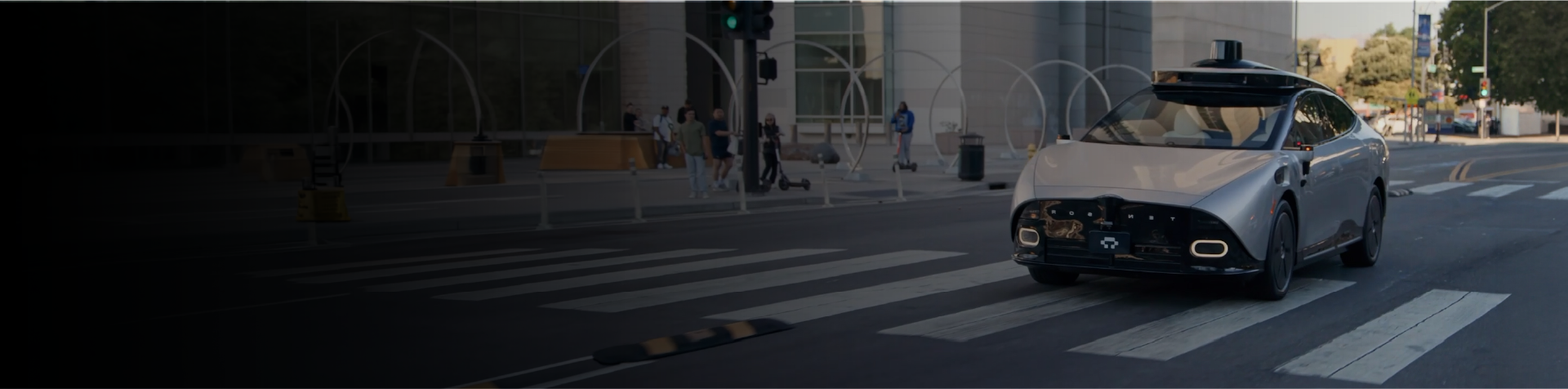
In the era of physical AI, vehicles are no longer just machines — they are intelligent agents capable of real-time perception, reasoning, and action. Tensor has built the world’s first personal RoboCar and AI-agentic vehicle around this principle.
Powered by Arm-based compute platforms, the Tensor RoboCar processes millions of data points per second, delivering a Level 4-capable vehicle that can safely navigate complex environments while enabling natural, language-based human interaction inside the cabin.
Together, Tensor and Arm are proving that scalable, energy-efficient compute is the foundation of the autonomous future.
Learn about Automotive on Arm
In the era of physical AI, vehicles are no longer just machines — they are intelligent agents capable of real-time perception, reasoning, and action. Tensor has built the world’s first personal RoboCar and AI-agentic vehicle around this principle.
Powered by Arm-based compute platforms, the Tensor RoboCar processes millions of data points per second, delivering a Level 4-capable vehicle that can safely navigate complex environments while enabling natural, language-based human interaction inside the cabin.
Together, Tensor and Arm are proving that scalable, energy-efficient compute is the foundation of the autonomous future.
Result
- 8,000 TOPS centralized autonomy compute
- 25.6 million lidar beams per second processed
- 433 Arm-based cores per vehicle
Market / Use Case
- Autonomous vehicles
- Physical AI / Robotics
- AI-first automotive design
Powered by Arm
- Arm-based, server-class automotive compute
- Arm CPU architecture powering devices from sensors to supercomputer
- Arm scalable compute platform
Building a RoboCar around physical AI
Autonomous driving demands more than raw compute—it requires precision. From the moment a photon hits a camera sensor to the torque applied to a steering actuator, every millisecond matters.
Tensor designed its RoboCar around this end-to-end latency challenge. With 17-megapixel cameras and five lidars, including a top-mounted lidar emitting 25.6 million beams per second, the system processes massive volumes of data in real time. At its core is an 8,000 TOPS automotive-grade supercomputer built on Arm-based CPUs, spanning edge sensors to centralized AI systems.
Rather than adapting AI to a vehicle, Tensor shaped the vehicle around AI. Sensor placement defined the design. Compute requirements defined the architecture. The scalable Arm CPU platform unified it all on a single architecture, delivering a cohesive AI-first platform that blends performance, efficiency, and safety.
Giving time back and redefining personal AI ownership
Tensor’s RoboCar represents a new model for physical AI in everyday life. With Level 4 autonomy, the vehicle completes end-to-end tasks without human intervention—from navigating dense city streets to picking up family members autonomously—while an onboard agentic AI system enables natural language interaction and personalized in-cabin experiences.
“We’re building a future where individuals own their AI,” says Jewel Li, COO of Tensor. “Your vehicle experience is yours: your data, your intelligence, your autonomy.”
Powered entirely by Arm architecture, Tensor is shaping a future where vehicles free up time, improve safety, and operate as trusted AI agents in the physical world. As autonomous systems scale globally, Arm-powered compute is making physical AI practical, scalable, and energy -efficient.
Key Takeaways
-
Tensor built the world’s first AI-agentic personal RoboCar powered by Arm-based compute across the entire vehicle.
-
8,000 TOPS of automotive-grade compute enables real-time Level 4 autonomy.
-
Arm architecture unifies sensors, centralized compute, and agentic AI systems.
-
Physical AI demands ultra low latency from perception to actuation, enabled by the scalable Arm platform.
-
Autonomous vehicles built on Arm can reduce time, improve safety, and enable private AI ownership.